
Gut Health
Much has been written in recent years about the importance of gut health. It plays an important role in overall well-being because the digestive system does more than process food. It supports immune function, nutrient absorption and communication with other parts of the body, including the brain. The community of microorganisms in the gut is often called the gut microbiome. This helps maintain balance in digestion and may influence energy levels, metabolism and aspects of mood and health. Habits such as eating a varied, fibre-rich diet, staying well hydrated, getting enough sleep and regular physical activity can help to support a healthy gut. These habits can also help your health and well-being as you prepare for your next Hedonistic Hike!
What is Kombucha?
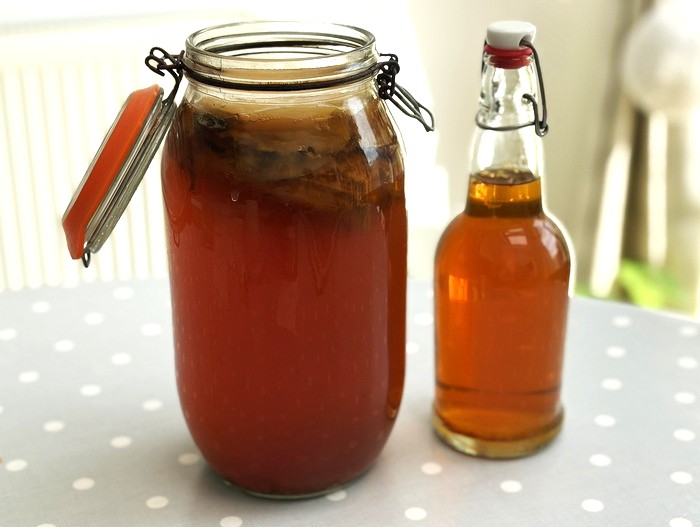
Kombucha is a fermented tea drink which people often take to support gut health. Believed to have originated in China, it is made by combining sweetened tea (usually black or green tea) with a culture of bacteria and yeast called a SCOBY (short for Symbiotic Culture of Bacteria and Yeast). During fermentation, the microorganisms consume much of the sugar and produce organic acids, along with small amounts of carbonation and compounds that give Kombucha its slightly tangy, fizzy taste. You can make your own Kombucha at home, save money on commercial brands and know exactly what the sugar content is of your drink.
How to make Kombucha at home
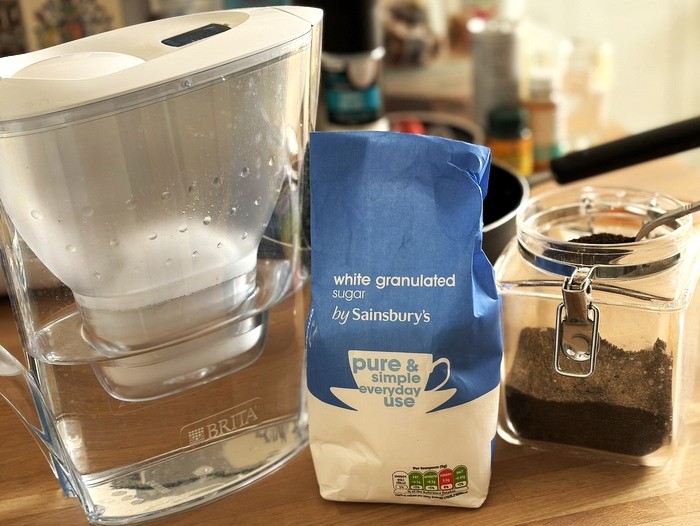
To begin you will need a 2 litre Kilner jar and several swing-top glass bottles. For the SCOBY you can order this online. However, if you have a friend who makes Kombucha you can ask them to split their SCOBY to get you started, alongside 200 ml of their made Kombucha, to which you can add your own ingredients.
We use:
10 g loose leaf tea
200/230 g granulated sugar (this depends on taste)
600 ml of filtered water
Mix the ingredients above in a saucepan and bring to the boil to dissolve the sugar and then leave to cool. When the tea mixture is fully cooled, strain the leaves out and pour it into the 2 litre jar. Add the SCOBY, alongside the 200 ml of made Kombucha, and fill the jar to the top with filtered water. Cover it with kitchen paper or a muslin cloth so that the mixture can breathe – do not seal it tight with the lid.
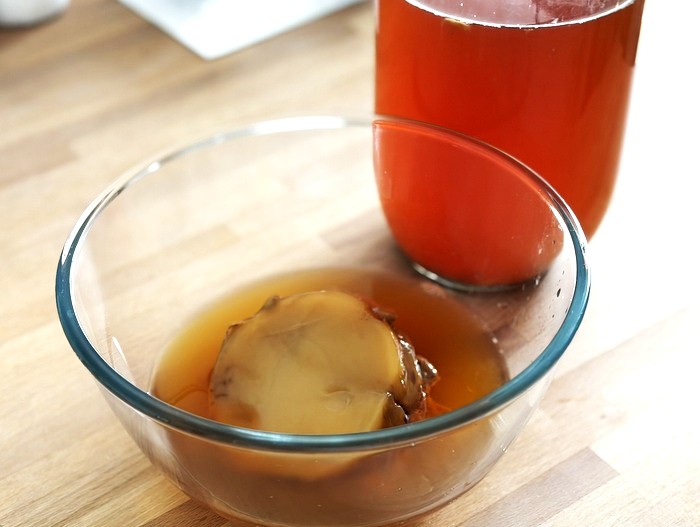
After ten days to two weeks you will be ready to bottle your first batch. Remove the SCOBY from the jar, alongside 200 ml of the made Kombucha, and then bottle the remaining liquid into the swing-top glass bottles, avoiding the dregs which may accumulate in the bottom. These bottles are ready to drink and are best stored in the fridge for longevity. At the point of bottling, some people add flavours such as ginger or elderflower syrup, but this is very much to taste.
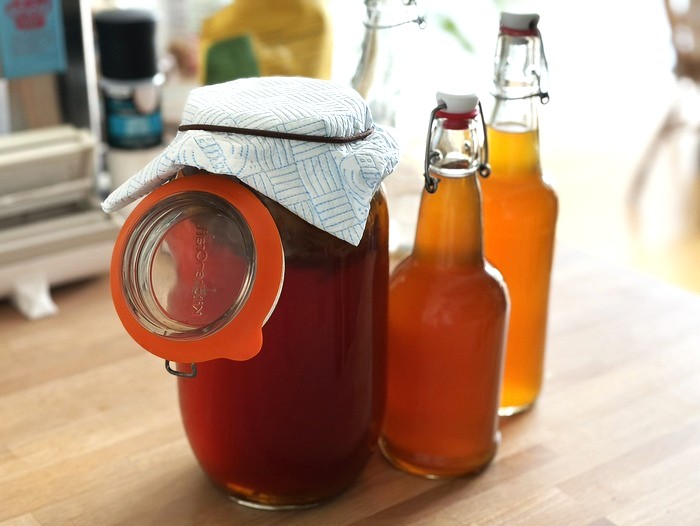
This process needs to be repeated every ten days to two weeks. The warmer the room where the jar is stored, the faster the fermentation process will be. The SCOBY will continue to grow, so needs to be reduced by splitting every month or so. You can discard this or give it to a friend to get their Kombucha journey started! Experiment with the quantity of sugar as you make your first few bottles to achieve the perfect taste for you, but less than 200 g is not advised.