
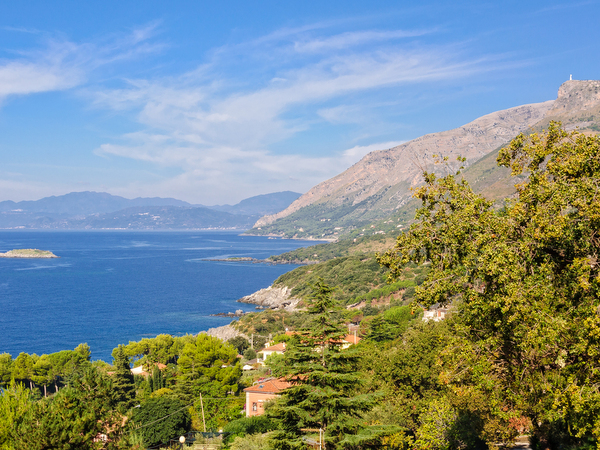
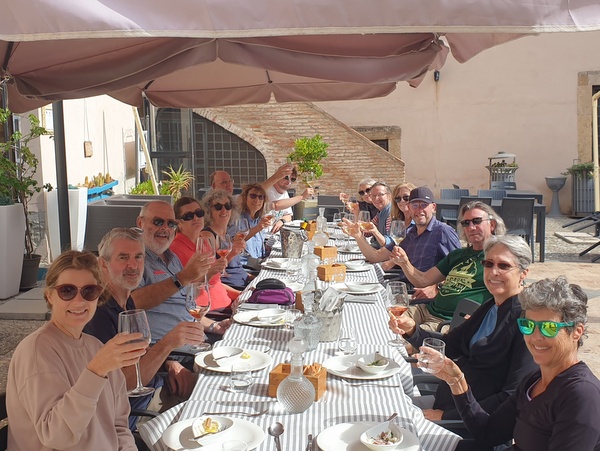
Winemaking in Basilicata is shaped by steep mountain slopes, volcanic soils and a long agricultural tradition. The area is in the foot of the Italian boot, with a coastline on two sides and some rugged mountains at its heart. Vineyards are often planted at higher elevations, where warm days and cooler nights help grapes retain freshness and structure. The region is especially known for robust red wines made from the Aglianico grape, particularly around the slopes of the extinct volcano Monte Vulture. Many producers nowadays combine traditional methods with modern techniques, making high quality wines at very reasonable prices. While reds dominate, small amounts of white and rosé wines are also produced, reflecting Basilicata’s diverse landscapes and local winemaking heritage. Guests on our Southern Italy tour will have the opportunity to taste many of these wines.
Key White Grapes from Basilicata
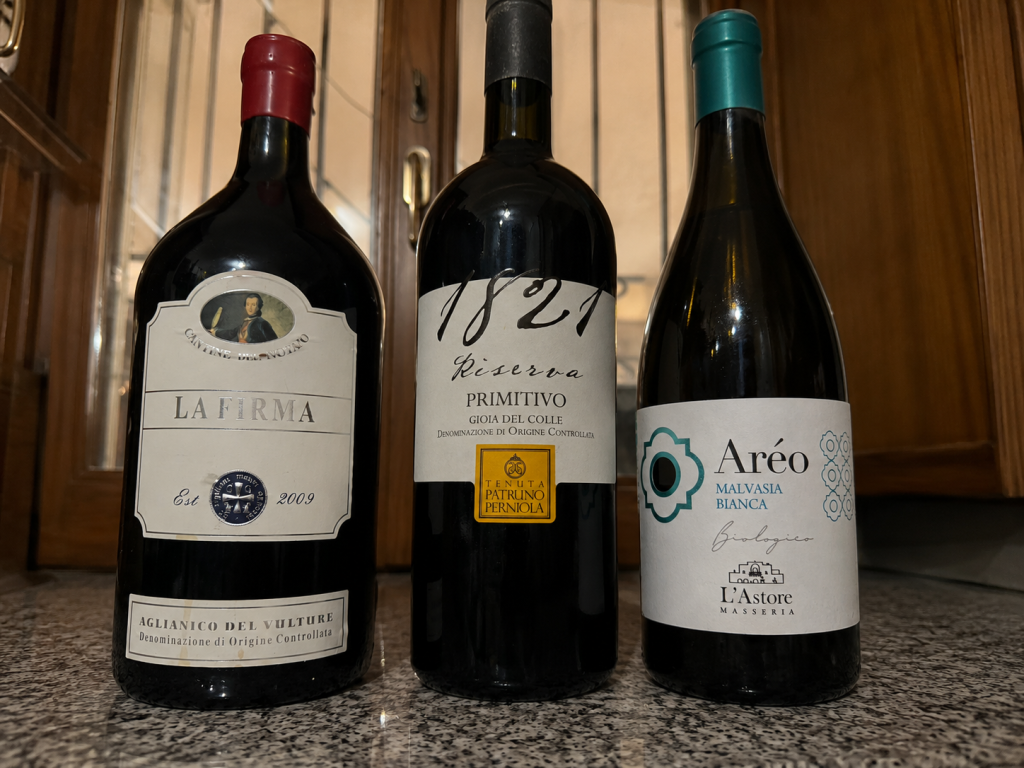
Malvasia — One of the historic white grapes grown in Basilicata. It can produce floral, lightly aromatic wines with notes of peach, citrus and herbs.
Moscato — Traditionally cultivated in small areas and valued for fragrant, aromatic wines with floral and stone-fruit character. Moscato di Rapolla is a well-loved local sweet wine with perfumed, honeyed flavours which is rarely found outside the region.
Greco — An ancient grape with Greek origins which appears in Basilicata as well as neighbouring regions.
Fiano — Grown in limited quantities in Basilicata and known for richer texture and flavours of pear, hazelnut, and wildflowers.
Key Red Grapes from Basilicata
Aglianico — The flagship red grape of Basilicata and one of Italy’s most respected native varieties. The best wines come from the volcanic area around Monte Vulture. It makes deeply coloured, well-structured wines with notes of dark cherry, plum and spice.
Primitivo — Found in smaller quantities in Basilicata (more famously associated with neighbouring Puglia). It generally gives fuller-bodied wines with ripe berry fruit and softer tannins. Primitivo grapes can also make interesting rosé wines.
Sangiovese — Although strongly associated with central Italy, it has long been cultivated in parts of Basilicata and sometimes appears in blends.
International varieties such as Cabernet Sauvignon and Merlot are grown across the region and used in blends.
Top Wine Denominations in Basilicata
Aglianico del Vulture Superiore – The region’s highest classification level. Basilicata’s best-known denomination and the region’s benchmark wine. Produced around the volcanic slopes of Monte Vulture, it is based primarily on Aglianico and is known for powerful structure, dark fruit, spice and strong ageing potential.
Aglianico del Vulture – These wines follow slightly less strict production and ageing rules than the wines above and are perhaps less concentrated.
Matera – Centred around the extraordinary cave city of Matera, this denomination allows a broader range of styles, including red, white, rosé and sparkling wines from several grape varieties.
Grottino di Roccanova – A smaller denomination in southern Basilicata known for traditional red wines, often using local southern Italian grape varieties and historically linked to cave cellars.
Terre dell’Alta Val d’Agri – A limited-production denomination from the mountainous inland zone, producing mostly red wines with a cooler-climate influence.
Top Tip
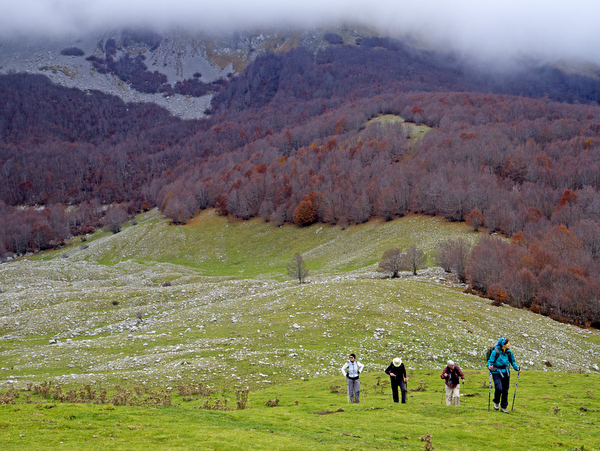
If you are looking for an interesting local speciality, try Amaro Lucano. It is probably Basilicata’s most famous non-wine drink. Created in the late 19th century in Pisticci, it is a bittersweet herbal liqueur made from a secret blend of over 30 botanicals. It can be drunk neat, over ice or in spritz-style cocktails. Also look out for traditional homemade fruit and herb liqueurs (liquori casalinghi). These are still made in local villages by infusing ingredients such as wild fennel, walnuts, citrus peel, myrtle or mountain herbs. Basilicata’s mountain geography and relative isolation from the rest of Italy has helped to preserve many culinary traditions, and these local liqueurs are an important part of its heritage.