
Many Hedonistic Hikers will have met our fabulous tour manager Cinzia on their travels with us in Italy. When she is not working with us, Cinzia and her English husband James run their own business, MacNay Travel & Wine and James is a qualified Italian Wine Ambassador. We asked him to help us with a question which is often asked on our hiking tours and that is how to decode the information on an Italian wine label. Here is his response.
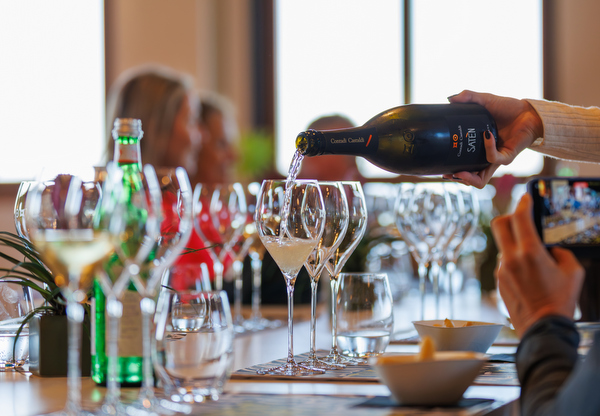
If you’ve ever found yourself standing in a state of bemusement before a shelf full of Italian wine, let me reassure you that you are not alone. I’ve been working in this corner of the wine world for twenty years, hold the top Italian wine qualification, and still sometimes have trouble making sense of it all.
One reason this shelf might seem so impenetrable is that – if you’re in a good, independent wine shop, at least – each label is the result of a unique mix of history, the law and the creativity of the winemaker. As a starting point, I would say two things: first, it does help if you have a bit of background knowledge, although this applies to enjoying wine in general. However, that is not to say that you should expect to infer everything you want to know simply by looking at the label – nobody can do that. And, second, nothing beats the help of a professional. Frequent that local independent wine shop and work with them over time to explore their range. Ah, and let’s not forget that a great winemaker does not a great label designer make.
The trick is to use the information to make a deduction about the wine’s origin, its style, and its quality. So, let’s get to it.
The Legal Requirements
The legal requirements include abv (alcohol by volume) and vessel size – easy so far. Then we have to talk about the bottler, the appellation and the vintage, and this is where things get more complicated.
The bottle must show the name and locality of the bottler. Not the winemaker: the bottler. Where this is accompanied by words like ‘Azienda Agricola’ (or ‘Az. Agr.’), it tells you that the bottler also grew the grapes and made the wine. Here we have our first marker of quality: this category of winery has control over the whole process. Other versions include Tenuta (usually for an older, larger estate), Cantina (can also buy in grapes), Fattoria (the Italian word for ‘farm’, and, in wine, commonly associated with Tuscany) or Cooperativa. There are quite a few others, as well.
Some wineries make multiple lines with different names and branding, but they must still identify themselves somewhere. Finally, industrial wineries making (usually anonymous or low quality) wines for large clients (supermarkets, big distributors, etc.) identify themselves only with an ‘ICQRF’ bottler code on the back. Next time you pick up that authentic-looking bottle in your supermarket, take a closer look…
The Appellation System
The modern appellation system was implemented in Italy in 1966. In part, it’s a form of protection for producers and consumers; and it’s also a marketing thing. Bottlers who declare the appellation must follow a strict set of rules, and these are laid out in a public document called the disciplinare. The disciplinare governs aspects like growing area and altitude, fruit yields, alcohol levels, and a thousand other details. Every appellation has its own, unique disciplinare. The appellation name (e.g. ‘Barolo’) must be identified on the bottle, and followed by a set of letters. DOCG, which stands for Denominazione di Origine Controllata e Garantita, is the top level, and there are just 78 of these at the time of writing. The DOCG has the strictest rules and (theoretically – disclaimer below) the most prestigious wines. All DOCG wines must have a government-issued seal on the neck of the bottle. If your bottle of Barolo doesn’t have those letters (i.e., ‘Barolo DOCG’, abbreviated or written in full) and that seal, then it ain’t legit and your shop is committing fraud.
The next step is DOC (same name, minus the G – much more numerous and with less strict rules). Below that is IGT, which stands for Indicazione Geografica Tipica, and below that – now rather old-fashioned and going out of use – is VdT: Vino da Tavola. Aside from all this, winemakers can and do declassify completely, leaving just ‘Vino Rosso’ or ‘Vino Bianco’ or suchlike on their labels. But there has to be something telling you what is in the bottle.
There exists an added level of complication. The laws governing the appellation system – not the disciplinare rules of production themselves, but the laws governing their purpose, scope and enforcement – are made at European level and cover all EU states. The European-level names of DOP (Denominazione di Origine Protetta) and IGP (Indicazione Geografica Protetta) may be used in any EU state, but they have not usurped the state-level ones. This means that they are interchangeable with them, and many bottlers do elect to use the European versions (DOP, IGP) in place of the Italian ones (DOC/G, IGT).
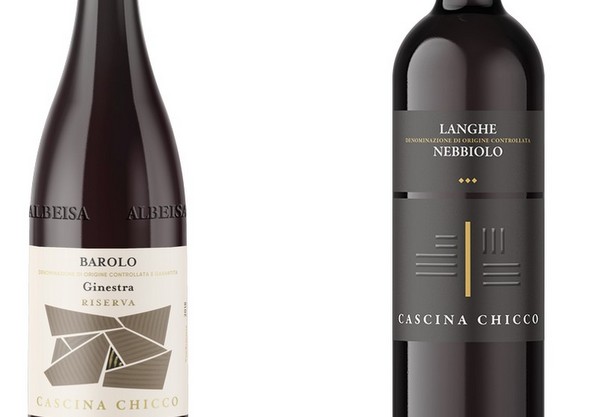
There’s a lot to unpack here. A winemaker can make a terrible DOCG wine but a magnificent declassified Vino Rosso. Maybe they want to make a splash; maybe they don’t want to pay the appellation ‘membership fees’; maybe they just leave the wine a day less in wood than they should; maybe they tear up the rule book completely. The world is awash with Barolo DOCG which is much cheaper than it should be – be suspicious, especially in supermarkets! Meanwhile, there is plenty (#1 in my cellar) of Langhe DOC Nebbiolo, which can stand shoulder to shoulder with good Barolo DOCG at half the price. (Nebbiolo, in case you’re wondering, is the grape used in Barolo).
The Grape Varieties
Ah, yes: grapes. There’s no requirement on the label to state the grape, except where the appellation name includes it (for example, Tintilia del Molise DOCG or Roero Arneis DOCG, where Tintilia and Arneis are the grapes). But, where the grape is named as an adjunct to the appellation name (such as with my beloved Langhe DOC Nebbiolo), as a rule of thumb it usually has to contain minimum 85% of that grape. The disciplinari do dictate the minimum and maximum grapes – for example, Chianti DOCG must be at least 70% Sangiovese. How do you know this without studying a book or consulting the disciplinare in question? You don’t, but your friendly wine merchant should know at least the basics.
The Location
What about the place? It’s a similar story. Our example appellations above, Tintilia del Molise DOCG and Roero Arneis DOCG, tell us where the wine is from: Molise is a region on the Adriatic coast, while Roero is an historic zone and famous wine area of Piemonte. But what about ‘Isola dei Nuraghi IGT’, I hear you ask? Well, if you know your Sardinian history – don’t worry, you’re not expected to – then you’ll know that the Bronze Age Nuragic civilisation populated that island, and their dwellings, Nuraghi, are scattered throughout it. Fascinating and confusing in equal measure.
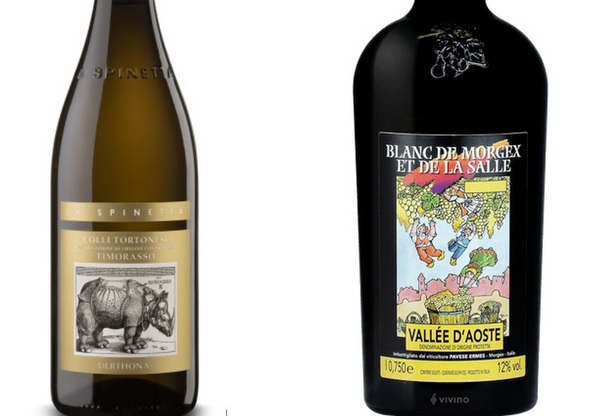
Sometimes an additional name is written alongside the appellation. A good example is the Piemontese appellation, Colli Tortonesi DOC. Here, instead of pursuing membership of the ‘DOCG club’, the growers decided on labelling their best wines ‘Derthona’. This is the Roman name for the city of Tortona, and its use cleverly conjours centuries of history and a sense of place, without excluding less expensive, but equally valid, bottlings. So, when you see ‘Colli Tortonesi DOC Derthona’ you’re in for a top quality white wine made entirely from the rare and prestigious Timorasso grape, grown in the best plots in the hills around the city of Tortona.
Elsewhere, this additional name can identify a sub-zone. Take Valle d’Aosta DOC, the tiny alpine region in the north west. This single, small, appellation covers a tremendous variety of winemaking and wine styles: the suffix, ‘Donnas’ identifies Nebbiolo grown on steep slopes to pergola and aged in wood; ‘Torrette’, a range of local grapes with Petit Rouge dominant; ‘Blanc de Morgex et de La Salle’ is just 22 hectares of Prié Blanc, grown to low pergola in the shadow of Mont Blanc. All wildly different, but all Valle d’Aosta DOC. Are you expected to know all this? Heck, no! Do these tell you the place or the grape? Heck, sometimes! (Torrette is neither grape nor place… it is just a made up name used, we presume, to project an image of the medieval towers which dominate the local mountainsides…)
The Suffix
Many appellations permit a ‘Riserva’ suffix, which indicates a longer ageing period. The ‘Superiore’ suffix, on the other hand, tells you that the wine was made using fruit from the best sites and with stricter vineyard protocols. Some disciplinari permit a combination of the two. For example, ‘Chianti Classico DOCG Superiore Riserva’. In some cases the ‘Superiore’ versions are also their own appellation, distinct from the wider locality. For example, Soave DOC and Soave Superiore DOC. The name ‘Classico’, meanwhile, identifies the historic region of production, and are usually their own appellation (‘Chianti DOCG’ vs ‘Chianti Classico DOCG’ or ‘Valpolicella DOC’ vs ‘Valpolicella Classico DOC’).
A small handful of appellations – Barolo DOCG, Barbaresco DOCG, Chianti Classico DOCG and Franciacorta DOCG among them – contain named villages (e.g. La Morra) or vineyards (referred to as MGA’s and UGA’s). These usually identify a combination of a specific geology and wine style, together with historical ownership. For example, ‘Barolo DOCG Bussia’, where ‘Bussia’ is the MGA. Within Barolo, specifically, some MGA’s further contain small parcels of vines whose growers can trace historical ownership. These are referred to as ‘Vigna’, belong only to a single producer, and may be named on the bottle – for example Prunotto’s ‘Barolo DOCG Bussia Riserva Vigna Colonello’. We are really getting into the weeds here, and it is worth noting that the most significant driver of quality is the winery, not the vineyard.
The Vintage
The vintage must be written on the label when the grape is from a single harvest. In most cases, including fruit from across multiple harvests means declassifying to Vino Rosso or Vino Bianco. One exception is classic method sparkling wine, where multiple harvests are often combined. In this case, the month and year of dégorgement is often included, but this is not obligatory. That reminds me – Prosecco, which is refermented in the tank, not the bottle, may also declare a single vintage. These ‘Millesimato’ wines are regarded as the best quality. And while we’re on Prosecco, since we drink so much of it these days, the best sites are the steep hillsides called ‘Rive’, and the most famous site of all is ‘Cartizze’. Both names may appear on your bottle and are a big driver of quality and price.
All the above are legal requirements. Other identifiers are dictated by the rules governing the production of a particular wine (Chianti Classico’s handsome black rooster is the famous example); some by the organisations or certifications to which the grower belongs (‘Vignaioli Indipendenti’, ‘Demeter’ biodynamic, ‘Vigne vecchie’ to identify old vines, and a thousand others). The ‘creative’ names used to distinguish different cuvées are at the whim of the winemaker, cutting through the jargon and giving you a very helpful handle.
The Conclusion
Where does all this leave us? There is duality in everything to do with Italian wine. It is simultaneously simple and complicated. It is banal and fascinating. It is the ancient and the modern. It commands a lifetime of study, if you let it, but can be enjoyed in a single evening.
I’ll leave you with some tips on choosing a good bottle. First, use your friendly local wine merchant. If they’re not friendly or don’t know their stuff, find another. If you do find yourself in the supermarket, look for the tell-tale indicators I’ve listed above. Price is a firm indicator of quality, but not the only one. Let the appellation guide, but not dictate. Be adventurous and drink a lot of wine – you’ll learn a lot and have fun doing it. Read around the subject. Life’s too short to drink lousy wine. And if you ever need a hand choosing, by all means drop me a line and I’ll be happy to help.
For more information, you can contact James directly on james@travelandwine.co.uk