
Have you ever wondered why Parmesan cheese, known in Italy as Parmigiano Reggiano, is so expensive? The answer lies in the time and effort that goes into each and every wheel of this King of Cheeses, and the cheesemaker’s adherence to strict regulations about its production.
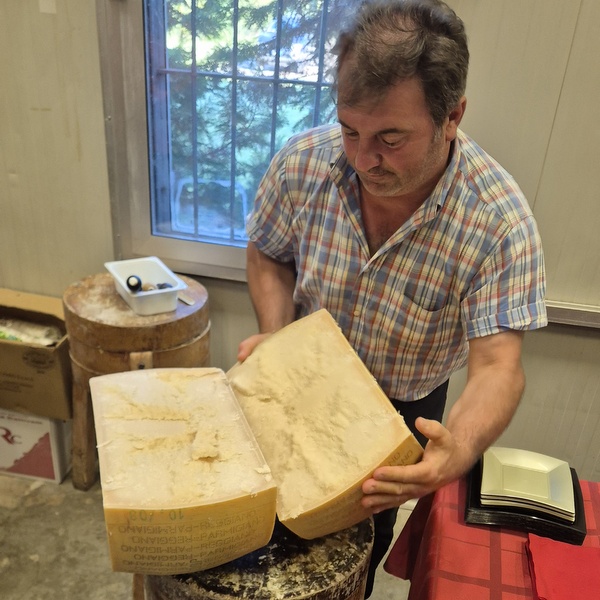
Making a single wheel of authentic Parmigiano Reggiano requires about 550 litres of raw cow’s milk, natural rennet, fermented whey, and salt. The milk must be a blend of evening milk and fresh morning milk. Added to this is the whey starter, which is left over from the previous day’s cheesemaking, and rich in natural lactic bacteria. Also added is rennet, a natural calf enzyme used to curdle the milk. Pure sea salt is added during the long soaking period in brine.
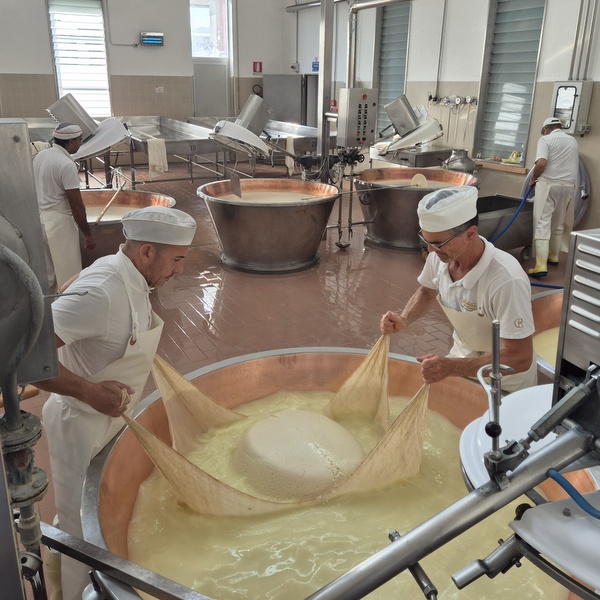
The mixture is poured into giant copper vats and heated until it coagulates into a solid mass. Cheesemakers use a tool called a “spino” to break the curd into tiny, grain-sized pieces. The heavy cheese solids sink to the bottom of the copper vat and fuse together into a single mass. This mass is lifted out using linen cloth, and then cut it in half. Each half forms a wheel.
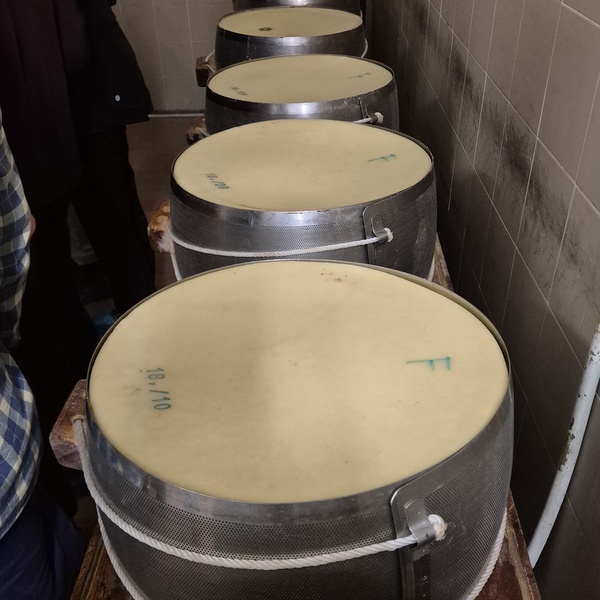
Next the cheese is put into round metal moulds. A dotted band around the mould imprints the “Parmigiano Reggiano” name, date, and dairy registration number directly onto the rind, while the cheese is still soft. After a couple of days, the wheels are submerged in a saturated saltwater bath for 20 days. The salt hardens the rind and starts to preserve the cheese.
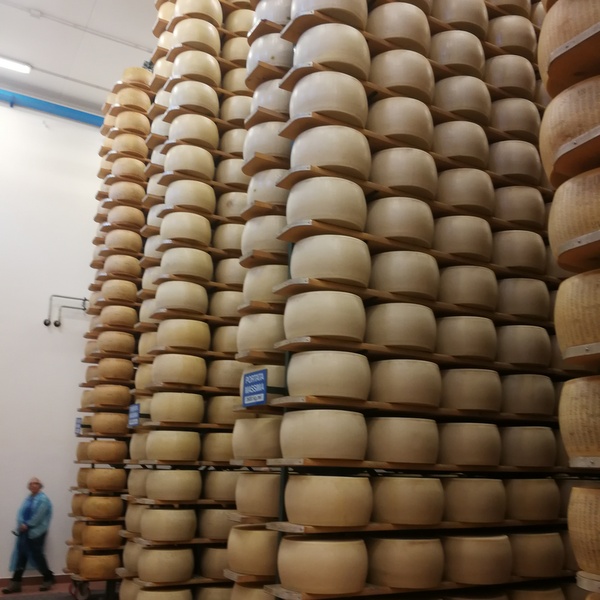
The wheels move to an ageing warehouse for a minimum of 12 months. They are stored on wooden shelves in a carefully climate-controlled environment. During this time three major changes occur. The wheels continuously lose water. This causes the cheese to compact, the rind to harden, and the flavours to concentrate. Enzymes naturally present in the milk break down proteins into free amino acids. This process makes the cheese highly digestible and completely lactose-free as it matures. The breakdown of these proteins forms small, crunchy white spots called tyrosine crystals. These “little diamonds” give the cheese its signature granular texture.
After at least 12 months of ageing in the warehouse, the wheels are tapped by a “battitore”, an expert using a small metal hammer. A clear, uniform sound means the inside is solid. A dull or hollow sound means there are cracks, air pockets, or defects. Only wheels that pass this test get the official hot-iron brand and can be sold as authentic Parmigiano Reggiano.
On our Parma, Tuscany and Ligurian Sea tour we are hiking in the high pastures around the city of Parma. At these higher altitudes the cows are grazing on a biodiverse diet of alpine grasses, herbs and flowers which make the milk rich, with a higher concentration of aromatic compounds. This adds a sweetness to the cheese, along with deeper herbal flavours, and a velvety texture which melts in the mouth. These wheels also develop a rich straw-yellow colour. This cheese has its own DOP label and is known as Parmigiano Reggiano “Prodotto di Montagna”. It undergoes a quality check with the hammer after 20 months of ageing and is commonly sold aged for 24, 30, or 36 months. It is marked with a distinctive green and gold seal.
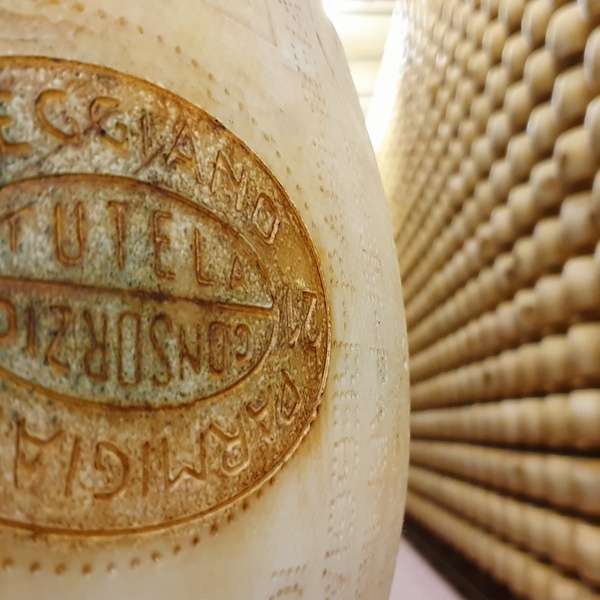
We get to visit a cheesemaker on the first day of our tour and, most importantly, do some tasting! If you come across this Parmigiano Reggiano “Prodotto di Montagna” for sale in your local shop or Deli, it may cost a little more but think of the time and passion that has gone into its production, and pay a little extra for a piece of perfection!