Umbria, often called the “green heart of Italy,” is a landlocked region whose wine identity is shaped by rolling hills, ancient towns and a strong tradition of farming. Though smaller and less internationally famous than its neighbour Tuscany, Umbria produces distinctive wines that combine authenticity with increasing quality. It has a long winemaking history dating beyond the Romans to the Etruscan civilisation. In recent decades, Umbrian producers have modernised winemaking while emphasising indigenous varieties, giving the region’s reputation a boost. Today, Umbria offers some of Italy’s most characterful wines, from the powerful Sagrantino to elegant, mineral-driven whites. Hikers on our Medieval Umbria tour have the chance to taste many of the wines listed below.
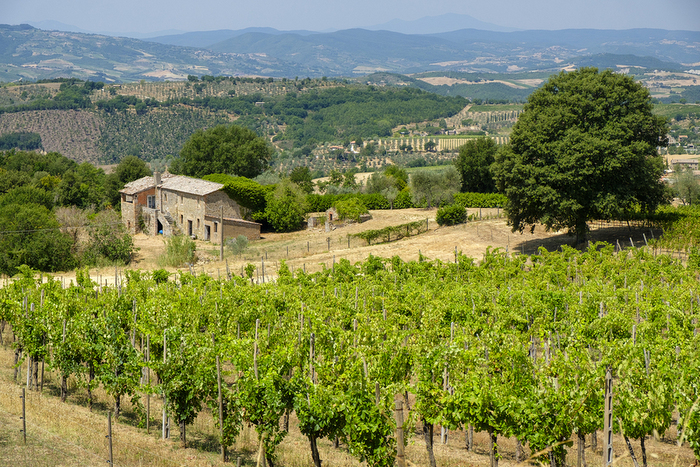
Key White Grapes from Umbria
Grechetto – One of the most important native white grapes in the region. It produces structured, textured wines and is frequently used in Orvieto and other Umbrian whites.
Trebbiano Toscano – In Umbria this is sometimes known as Procanico and is part of the large Trebbiano family, one of the most popular and oldest known white grape varieties in Italy.
Verdello – Though not widely known outside Umbria and Tuscany, this indigenous white grape is appreciated by winemakers for its blending potential and contribution to the crisp, lively white wines of this central part of Italy.
International varieties such as chardonnay, pinot bianco and sauvignon are also planted across Umbria.
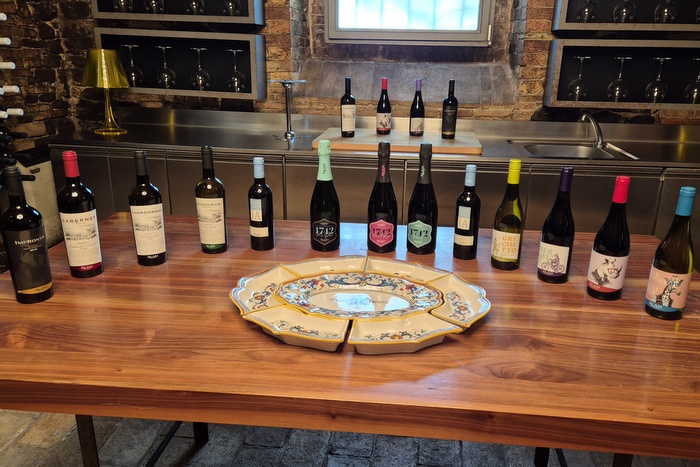
Key Red Grapes from Umbria
Sagrantino – This is perhaps the most emblematic red grape of Umbria, cultivated in the area around the village of Montefalco. It is known for very strong tannins, deep colour and great ageing potential.
Sangiovese – While Sangiovese is widespread in Tuscany, it’s also very important to the wines of Umbria. It is used both pure and in local blends.
Ciliegiolo and Canaiolo – These are two indigenous red grapes which also thrive in Tuscany and are often used in blends.
International varieties are also planted across the region, examples being merlot, cabernet sauvignon and cabernet franc.
Top Wine Denominations in Umbria
Sagrantino di Montefalco – The flagship red wine of Umbria, made with 100% of the native sagrantino grape. It is an intense drinking experience, rich with strong tannins and has a minimum ageing period of 30 months before release. It also comes in a sweet passito version. The village of Montefalco sits right in the heart of the region.
Torgiano Rosso Riserva – A second hugely important red wine from the Torgiano area. This is made with at least 70% sangiovese grapes and has a minimum ageing period of 36 months before being released. This elegant and structured wine has only a small annual production.
Orvieto – Probably the most famous Umbrian white wine, it is made around the town of Orvieto on the Umbria/Lazio border. Blended from the local grapes grechetto, trebbiano, verdello and malvasia. It is a crisp, mineral and aromatic, easy-drinking wine.
Colli del Trasimeno – Vineyards planted in the beautiful hills between Lake Trasimeno and Perugia produce reds with merlot, cabernet sauvignon and sangiovese grapes, and whites made with blends of native and international varieties.
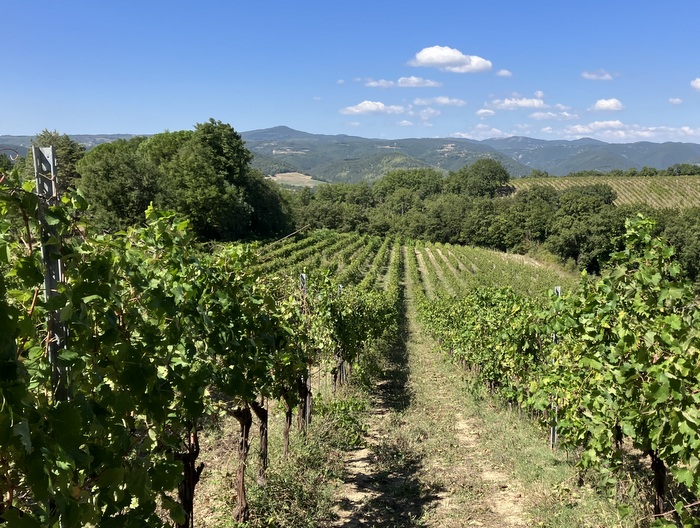
Wine Tip
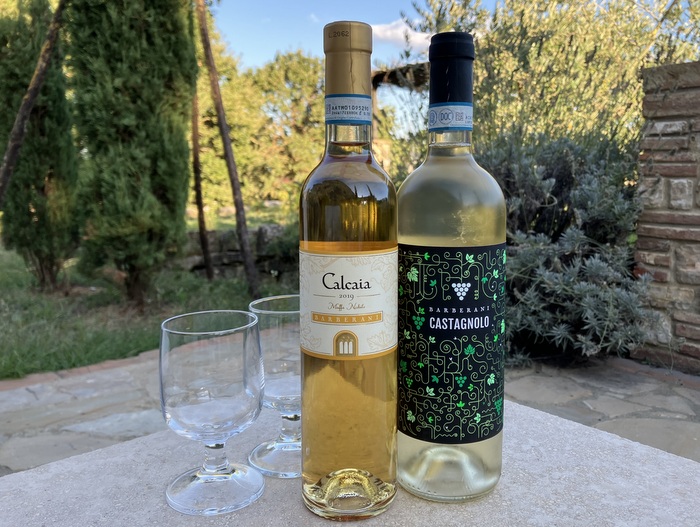
In times gone by Orvieto’s wines were known for being sweet and golden. The story goes that artist Luca Signorelli, who was commissioned to fresco the San Brizio chapel in Orvieto’s celebrated Duomo, asked for an unlimited supply of local wine as part of his remuneration. Over time, tastes have changed and today Orvieto’s white wines are generally crisp, light and dry. However, some producers still make the semi-sweet Orvieto abboccato style, as well as fully-sweet dessert wines, such as Barberani’s delicious Calcaia. The area around Orvieto is influenced by two large lakes, the volcanic Lake Bolsena and Lake Corbara formed by the damming of the Tiber River. The result of all this water is that vines here are affected by Botrytis cinerea, otherwise known as Noble Rot. Noble Rot punctures the grape skins, allowing the water inside to evaporate. This shrivels the grapes and concentrates sugars, acids and flavours, creating an extremely sweet yet balanced juice. The resulting wine is lusciously rich, smooth and silky.