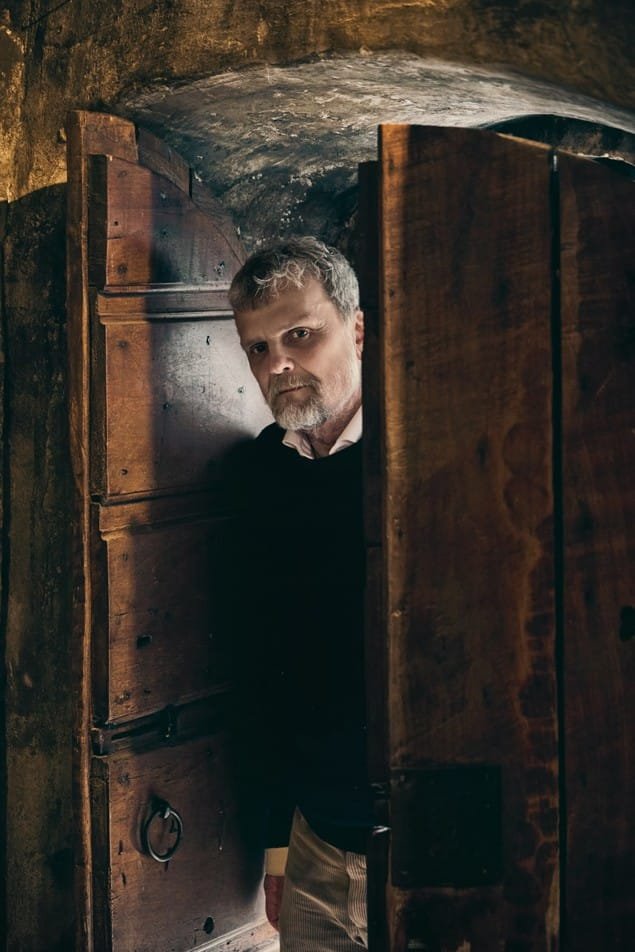
Earlier this year Italy said goodbye to its champion of Slow Food, Carlo Petrini. This week it has said another farewell to a champion of Slow Tourism. Daniele Kihlgren was an entrepreneur who became internationally recognised for restoring abandoned historic villages and breathing new life back into the buildings and community.
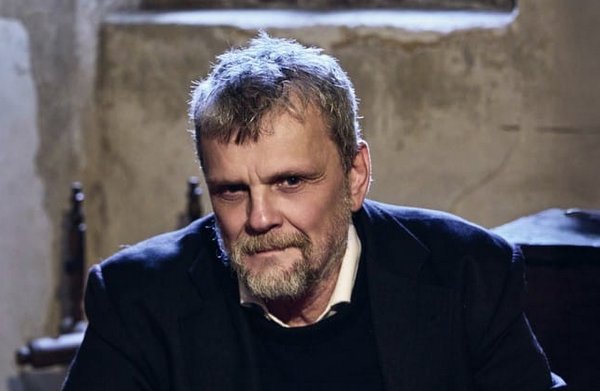
Kihlgren was Milanese, of Swedish-Italian background, and the third son of a wealthy family of cement entrepreneurs. His background is important because much of his later philosophy rebelled against conventional property development and the indiscriminate use of concrete. He set out to prove that preserving a place exactly for what it is can be an economically viable and sustainable form of development.
He had a restless and adventurous personality. It was while travelling through Abruzzo on a motorcycle in the late 1990s that he encountered the dilapidated, medieval village of Santo Stefano di Sessanio. This remote, mountain village became his great experiment.
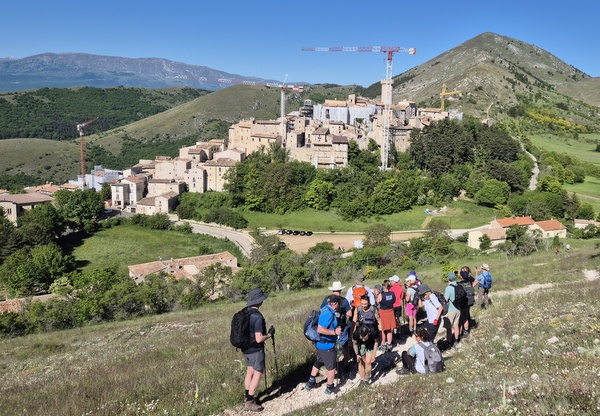
He began acquiring abandoned properties and restoring them meticulously. His ambition was to preserve the village’s architecture, materials and atmosphere while creating an economically viable reason for people to return. He had a vision for making money from conservation rather than from destroying the landscape, and giving back life and jobs to the local community. His restorations were painstaking, focussing on maintaining local architecture, using traditional materials and crafts such as weaving, and championing ancient recipes and regional produce. The notion of restoring all the existing properties in one village became known as an “Albergo Diffuso” or “Scattered Hotel” and the model has been copied many times across Italy. The Albergo Sextantio was opened in 2005.
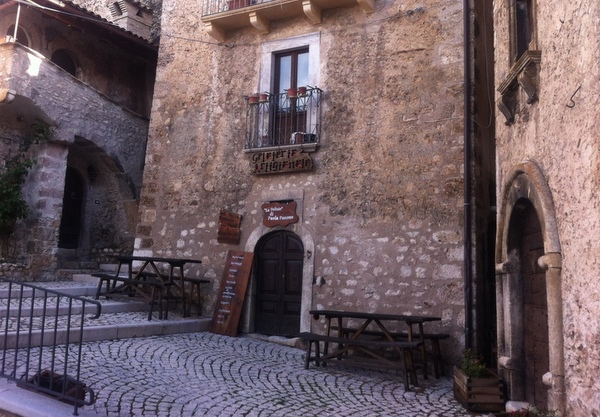
The village hotel began attracting international visitors, creating employment and giving economic value to buildings that otherwise might have continued to decay. We first stayed in the wonderful Sextantio hotel in 2013, on the very first departure of our Wilds of Abruzzo tour, and we have visited almost every year since.
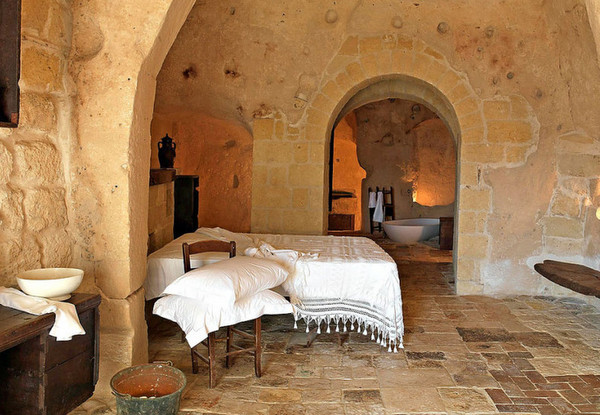
Kihlgren’s second experiment took him to the extraordinary Sassi di Matera, the ancient cave dwellings of the city of Matera carved out of the limestone cliffs. Here he developed a second hotel. Rather than disguising the caves behind conventional hotel architecture, he preserved their raw character. Stone surfaces were restored, while modern plumbing, electricity and heating were carefully incorporated. He modernised the function of the caves whilst faithfully preserving their identity. Guests on our Southern Italy tour have slept in these cave dwellings since our first tour in 2016, and it is an unforgettable place to stay.
In his later life he took on challenges in Africa. He was closely involved with the building of a paediatric hospital in Congo. He helped to develop tourism projects whose profits could help finance healthcare for the local population, and worked on a health-insurance scheme. He was working right up until his untimely death at the age of only 60.
The interesting contradiction at the heart of Daniele Kihlgren’s life is that he came from a family associated with the cement industry, yet became one of the strongest advocates for avoiding unnecessary new construction.
Other similar projects have started to appear all over Italy. We stay in another on our Southern Italy tour in Rotonda, and on our Northern Tuscany and Ravenna tour we stop for two nights in the charming village of Palazzuolo sul Senio, which is also an Albergo Diffuso. There is now a National Association for these projects and you can find out more about this from their website.